

What is a Minor in College?


Choosing a major is an important step toward reaching your career goals. However, there are many opportunities to broaden your studies and make yourself even more marketable while earning your degree.
By adding a minor to your degree program, you can make yourself as well-rounded as possible for the job market while also studying something you love.
What is a Minor Degree?
A minor isn't a degree on its own. It's a set of courses designed to add a secondary specialization to your degree or explore an area of academic interest outside of your major.
What Are Majors and Minors?
When you're earning a college degree, your major is your primary field of study. It's what you'll study most, and it's the subject you'll see on your diploma when you graduate. A minor is a secondary discipline that can complement your major or add variety to your coursework.
Bachelor's degrees are 120 credits and typically require around 60 of those credits to be related to your major subject. In contrast, a minor is usually in the realm of 15-18 credits, but each program is different.

Think of a minor as an add-on pack that boosts your education, said Dr. Christopher Lee, an associate dean at Southern New Hampshire University (SNHU) with a PhD in English and Comparative Literature from Columbia University. “The minor gives you good coverage of the additional area, usually 15 credits, in a way that doesn’t take up a huge chunk of your degree,” Lee said.
If you're confident in your choice of major, earning a minor is a sensible way to add a range of courses in another field and earn academic credit for it. But whether or not you add a minor to your degree program really depends on your goals.
What's the Point of Minoring in College?
You might choose a minor to add versatility to your resume or to explore a subject you'd like to know more about. Choosing a minor can even help you realize what you really want to do, according to Lee.
A great benefit of earning a minor is that it gives you more ownership of your education. You gain new skill sets that create opportunities for you that you may not have discovered when focused on your major courses alone.
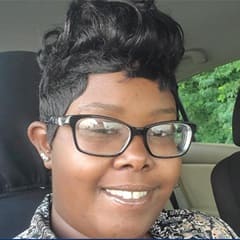
SNHU graduate Jordan Oldham '22 majored in English and creative writing and opted to earn minors in sport management and organizational leadership to help her serve her community.
“Sports management and organizational leadership to complement my Bachelor of Arts degree in Creative Writing and English gives me an extra layer of expertise so that I can better assist my clientele while working on building a long-term career serving my clients and community," she said.
Having that extra expertise helps her feel more confident not just when pursuing promotions with her employer, but in other areas of her life as well. “I am more confident when I’m up against any competition when seeking opportunities elsewhere in life, too,” she said.
How to Choose a Minor
Consider which subjects look the most interesting and let that lead you to customize your own path and point you in the right direction for your learning.
To narrow down your options, start by talking to your academic advisor. They know your school’s offerings better than anybody. They have seen your transcripts and can make recommendations based on your available credits and interests.

“Jobs-focused pairings like a project management minor for a liberal arts student, or a psychology minor for a marketing student would be interesting pairings that make you more marketable to employers,” said Matt DiPirro, an associate dean focused on liberal arts who has worked at SNHU for over a decade.
Lee suggests combining minors and majors that are complementary, with skills that overlap. “A minor in American Studies is a really interesting pair for a major in American History or American Literature,” he said.
Regardless of your major, Lee said minoring in a subject like English or communications can help you demonstrate soft skills to hiring managers. If you major in a STEM field, for example, a job you get after you graduate will likely still require you to write and communicate well.
So, What Should I Minor In?
Ultimately, no one can choose your college minor but you, and there are a number of ways you could go about your decision. Depending on your university, you may have the option to minor in a wide variety of program areas.

After Haley-Grace McCormick '24 considered her options, she worked with her academic advisor to pair two minors and a concentration with her major. Ultimately, she graduated from SNHU with a bachelor's in creative writing and English with a concentration in screenwriting and minors in psychology and art history.
The minors allowed McCormick to study subjects she felt were relevant to her goal of becoming a writer — a goal she achieved in 2026 with the publication of her debut novel, "The Enemy of Time."
The psychology minor, she said, was to help her learn to write characters that feel real.
"I need to understand the human brain, and I need to understand why we do the things that we do," she said. "Why do we experience rage? Why do we experience grief? And what are the different ways that we experience it? How do you become relatable to the audience in a way that changes the way that they see their own life?"
The art history minor supported her other passion in life: creating art.
"I got to dissect other artists and understand what they were thinking, what they were doing and find out how these creative minds were working," McCormick said. "It was ... one of those experiences that was a little self-indulgent — kind of just wanted it for me. But at the same time, it's actually helped me so much as a writer."
Explore 60+ minors offered at SNHU.
Is a College Minor Worth It?
Earning a minor offers the opportunity to customize your education and build your credentials to help you stand out in a crowded job market, according to DiPirro.
By adding a minor to your academic program, he said, you signal to employers that you have diversified skills, a drive to succeed and an ability to take on work outside your current job description. “For its lean size, a minor can do a lot for you,” he said.
And, DiPirro noted, you may even have credits toward a minor already. If so, adding on a few extra classes to complete the minor can round out your learning and your resume at the same time.
“Employers continue to say that they want graduates with a broad skill and knowledge base who can work with other people, make good decisions and grow with the company,” DiPirro said.

Holly Carroll '23 started her education in 1997 with an interest in education and history. After a hiatus from her studies, she completed her bachelor's degree in history at SNHU, adding minors in English language and literature and American studies.
Her minors complemented her history degree because the fields are writing-intensive. With that major/minor combination, Carroll can show employers that her writing skills are solid while also fueling her personal interest in writing creatively.
“I am proud to have chosen the minors that I did,” Carroll said. “In doing so, I forged wonderful connections with SNHU professors and students that have outlasted the 8-week duration of any class."
Online. On campus. Choose your program from 200+ SNHU degrees that can take you where you want to go.
A former higher education administrator, Dr. Marie Morganelli is a career educator and writer. She has taught and tutored composition, literature, and writing at all levels from middle school through graduate school. With two graduate degrees in English language and literature, her focus — whether teaching or writing — is in helping to raise the voices of others through the power of storytelling. Connect with her on LinkedIn.
Explore more content like this article

How to Get an Affordable Online MBA

What Are Honor Societies? Requirements, Benefits and More

Academic Spotlight: Kaia Cunningham, Dyslexia and Language-Based Learning Disabilities Adjunct Instructor
About Southern New Hampshire University

SNHU is a nonprofit, accredited university with a mission to make high-quality education more accessible and affordable for everyone.
Founded in 1932, and online since 1995, we’ve helped countless students reach their goals with flexible, career-focused programs. Our 300-acre campus in Manchester, NH is home to over 3,000 students, and we serve over 135,000 students online. Visit our about SNHU page to learn more about our mission, accreditations, leadership team, national recognitions and awards.